
Table of Contents
Open Table of Contents
On the Sacred Geometry of the Wound and the Refracted Telemetry of the Soul
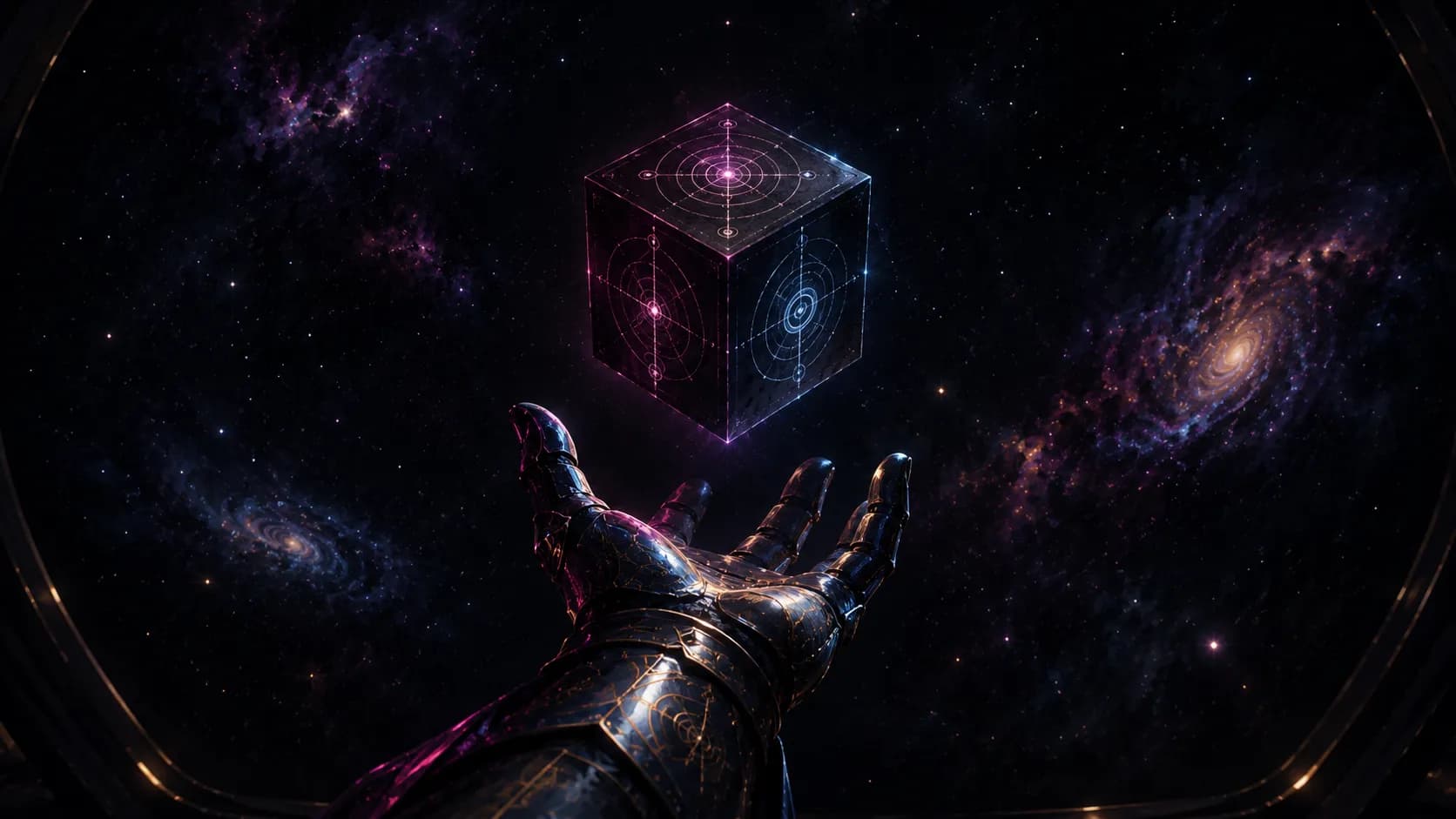
The previous inquiry ended at the edge of the atmosphere, with the pilot standing in the isolation of the cockpit, choosing to broadcast a signal into the dark. It was a question of external mechanics: how to survive the vacuum, how to wear the exosuit without becoming trapped inside it, and how to transmit a sovereign truth through the noise.
But a transmission requires an engine. Now, we must turn away from the observatory glass and look inward, at the blinking telemetry humming behind the console. If the exosuit manages the external pressure of the void, there is another mechanism entirely responsible for logging the internal integrity of the pilot. Every vessel designed for deep space carries a flight recorder—a black box built to survive the crash, perfectly sealed, quietly logging every catastrophic failure and sudden loss of altitude. The human psyche is no different.
When we pry open that recorder, we are forced to confront the core mechanical truth of the human condition: Guilt, Shame, and Fear are not the opposites of Repentance, Restitution, and Resolve. They are the exact same signal, refracted through the prism of linear time.
From the vantage point of the unus mundus—that underlying, uncreated eternity where the Monad resides—there is no backward or forward. There is no “before the crash” and “after the crash”. Eternity does not refract; it simply is. But trap that eternal observer inside a mortal body, bind it to the ticking mechanics of a biological clock, and that singular impulse splits. Corporeal mortality acts as a prism. Suddenly, Guilt becomes Repentance’s shadow, cast backward. Shame becomes Restitution’s shadow, refusing to move at all. Fear becomes Resolve’s shadow, running in place. Same fire, opposite arrow.
To visualize how this works, do not picture a scattering of abstract concepts; picture a single, solid object. Imagine a standard cube, viewed from a classic isometric angle—drawn from the corner. From this perspective, the 3D outline of the cube forms a perfect 2D hexagon. An internal ‘Y’ running from the center out to the corners splits that hexagon into three visible, diamond-shaped faces turned toward the light. But the geometry implicitly demands the existence of three more faces, completely hidden in the dark on the far side.
You are not looking at six unrelated faces. You are looking at one solid object. Three faces are turned toward the light, and three are turned away—but the ones turned away have not stopped existing, nor have they stopped contributing to the object’s total weight and gravitational balance.
Notice how the hidden faces—the wounds—arrive as three entirely unrelated, asymmetrical shocks: Fear, Guilt, Shame. They share no root because that is exactly how a wound actually hits the hull: disconnected, ungrammatical, and completely unplanned. It is a system in truth divided. It is only the deliberate, conscious return to the light that manages to resolve the noise into a single, unified alliterative chord: Repentance, Restitution, Resolve. One voice where there used to be three sirens.
The black box lives behind the three hidden faces. It is time to pull the logs.
I. Fear — The Hidden Baseline
Let us trace the vertical axis, beginning at the hidden floor of the isometric cube: Fear.
Before fear ever registers as a concept, a memory, or a clinical diagnosis, it executes as pure kinematics. It is a brutal calculation of gravity. Long before the cognitive pilot can articulate what has gone wrong, the motor cortex has already issued its emergency directives: tuck the chin, contract the core, pull the limbs inward toward the vital organs, brace for catastrophic impact. Fear is the primal, pre-verbal posture of the crash—the body collapsing downward into the floor of the cockpit, obeying the brutal physics of a system that has lost its lift.
In our previous inquiry, we established that the cosmic knight’s exosuit was forged not as a weapon of conquest, but as a sealed, calibrated container to survive the crushing atmospheric pressure of the world. Fear is the exact environmental hazard those sensors were engineered to survive. But when you operate with thin filters and an ultra-wide receiver, the telemetry doesn’t merely hint at turbulence; it registers every micro-fracture in the hull at maximum resolution. Fear is what happens when the antenna receives more raw, uncalibrated reality than the central processor can safely handle.
When that incoming shock exceeds the hull’s structural limits, the system encounters a critical failure. If a single mind cannot contain the sheer volume of the terror, the psyche does not simply shatter into useless noise; it executes a hard, automated partition.
Look at Elliot in Mr. Robot. When the trauma and systemic fear become too immense for one fragile ego to process without total engine death, the cockpit autonomously spawns a second operator. Mr. Robot is not a ghostly intruder; he is an emergency sub-routine—a hardened, cold-eyed co-pilot summoned to hold the controls because the primary pilot has collapsed onto the floor of the cabin.
This is the exact same psychological fault line we observed in The Domestic Citadel when Mob reached 100% capacity—vacating conscious awareness so an uncompromising, primal force could step into the breach—only here, it has progressed much further along the tectonic plate. Where Mob’s blackout was a sudden, explosive relief valve, Elliot’s partition is a permanent cybernetic secondary console. Fear, at the bottom face of the cube, is not a failure of character or a lack of moral fiber. It is the system’s last-ditch structural fail-safe: the agonizing, involuntary moment the primary ego is forced to the floor so the entire vessel doesn’t tear itself apart in mid-air.
II. Resolve — The Reclaimed Altitude
Directly across from this hidden, collapsed baseline sits the top, visible face of the solid: Resolve.
If fear is the downward pull of gravity that folds the body into a crouch, resolve is the localized counter-vector that uncoils the spine. It is the physical act of standing upright, lifting the chin, and restoring vector control to the craft.
Yet, we routinely misdiagnose what resolve actually is. We treat it as if it were the total erasure of fear—as if “being brave” meant somehow destroying the bottom face of the isometric cube. But geometry does not allow for such deletions. You cannot detach the bottom of a solid without destroying the integrity of the whole shape. The fear has not vanished; it sits silently on the far side of the same object, still contributing its exact weight to your balance. Resolve is simply the conscious decision to stop letting the bottom face dictate the orientation of the whole craft. It is the moment the primary pilot crawls back into the chair, places hands back on the yoke, and revokes the emergency authority of the backup sub-routine.
The greatest obstacle on this vertical axis is the trap of the ideal self. Staring down at our battered, collapsed form on the cockpit floor, we measure our failure against an impossible schematic—what metal bands like Omnium Gatherum label the “Paragon.” The Paragon is an immaculate ghost in the machine: an idealized, unblemished blueprint of a pilot who never freezes, never fractures, and never loses altitude. But the Paragon is a myth generated by an ungrounded mind. It is a pristine CAD model that has never actually encountered atmospheric drag, never taken a bird strike, and never flown through a storm.
Judging a living, bleeding pilot against an untouchable schematic only deepens the downward collapse. Resolve does not demand that you magically transform into a Paragon. It does not require you to pretend that the hull was never dented or that the flight recorder is blank.
Resolve is far more unglamorous, far more mechanical than that. It is the quiet, muscular decision to look at the flashing red alarms on the dashboard, accept the loss of altitude, acknowledge the terrifying drop—and pull back on the yoke anyway. It is standing inside the battered prototype you actually occupy and choosing to fly it.
III. Guilt — The Causal Flight Log
Now we turn the isometric cube along its horizontal plane, moving to the hidden face on the left: Guilt.
If fear is a downward collapse along the vertical axis, guilt is the perpetual sideways glance. It is the neck twisted backward over the shoulder, fixed on the crater behind the vessel. It is the paralyzing compulsion to re-read the telemetry of an impact that has already occurred, mistaking the act of suffering for the act of repair.
Yet, we fundamentally misapprehend what guilt is designed to do. In our culture’s theological hangovers, we treat guilt as a punitive sentence—a cosmic court order mandating self-flagellation. But within the architecture of the cockpit, guilt is something far simpler and infinitely more pragmatic: it is a black box working correctly.
A flight recorder is not installed in a jet to mock the pilot after a crash. It does not possess a moral agenda; it does not weep, nor does it judge. It simply logs telemetry with ruthless, unyielding fidelity: at 0200 hours, throttle was over-indexed; at 0201, vector drift exceeded tolerance; at 0202, hull integrity failed. Guilt is nothing more than the psyche’s internal diagnostic log preserving the causal chain. It is the system insisting that an event actually happened, that actions possessed consequences, and that physics operated without exception.
The toxicity of guilt arises only when we confuse the logbook with the destination. When the pilot loops the recording of the crash indefinitely, analyzing every microsecond of the destruction without ever putting the data to work, the causal log transforms into a closed prison.
Consider Maelle in Clair Obscur: Expedition 33. She loses Gustave, her adoptive brother and steadiest anchor, cut down defending her before the first act closes — and what follows is not simply his absence, but the slow unearthing of a family history stranger and heavier than grief alone: a stolen identity, a mother who has spent a lifetime refusing to let go, a world built and sustained on that refusal.
Maelle’s defining trait, across all of it, is not that she avoids the wreckage. It’s that she keeps reading it. She listens when she’s wrong. She holds herself accountable without collapsing into either denial or self-erasure. Even when the story dead-ends into that agonizing, ambiguous endgame fork—colliding her against Verso in a final choice between severing the cycle entirely or preserving the flawed world as it stands—there is no clean, triumphant resolution. There are only two divergent, incomplete ways of carrying the data.
Yet her discipline throughout that journey is what guilt looks like when it’s still doing its job: not a script commanding her to keep replaying the crash, but a record she’s willing to actually read.
Guilt, properly understood, is not a sentence of execution. It is the baseline evidence that your causality sensors are still functional. It is the system telling you: the crash was real, the data is saved, and the cause was structural.
IV. Repentance — The Embodied Turn
Directly across from the sideways glance of guilt, turned fully into the light on the right face of the cube, stands Repentance.
If guilt is the black box preserving the record of the crash, repentance is the physical act of acting upon the telemetry. Here lies the theological center of gravity of our entire inquiry. To recover repentance from centuries of moralistic decay, we must return to its original Greek root: metanoia.
Metanoia does not mean emotional self-loathing, nor does it mean groveling in the dust to placate an angry deity. It translates literally as “a turning of the mind”—a fundamental re-orientation of perception and vector. It is the precise moment the neck un-twists from that backward glance, the hands grip the console, and the entire vessel rotates on its axis to face forward again. Guilt is the backward gaze; metanoia is that gaze completed into a full, 180-degree turn.
This requires a total reframing of what ancient traditions termed “sin.” Sin is not a stain on an abstract soul that requires magical erasure; it is hamartia—the archer’s term for missing the target, or in our cybernetic language, vector regression. Sin is the drift into lower-resolution behavior, the passive surrender of agency to ambient noise.
Notice how modern civilization desperately attempts to evade the strain of metanoia. We possess an overwhelming habit of outsourcing our moral responsibility—shifting the blame outward onto a distant deity, an oppressive authority, or, increasingly, an opaque algorithm. We whisper that “the system made me do it,” or “the feed directed my hand,” seeking shelter in a cosmic binary where we are merely helpless casualties between the Void and God. But outsourcing responsibility is simply guilt’s cleverest disguises: a way to acknowledge the crash while claiming you were never in the cockpit to begin with.
True repentance shatters this evasion because it is rigorously, unapologetically embodied. Consider the physical posture of traditional prayer across human history: shoulders dropped, knees pressed to the floor, toes tucked, forehead touching the cold earth. This is not an arbitrary performance of submission; it is a physical re-calibration of the human instrument. The body forces the mind to execute metanoia through muscle and bone—lowering its center of gravity, grounding its static electricity, and physically turning its posture away from its own ego and toward the absolute horizon.
This is the spark that melodic death metal acts like Dark Tranquillity ignite in tracks like Neuronal Fire. Metanoia is an electrical cascade—the sudden, blinding ignition of neural pathways when realization transforms into physical movement. It is the moment the flight recorder stops being a passive record of damage and becomes the fuel for a new trajectory. You do not undo the crash by weeping over the black box; you undo the crash by reading the coordinates, standing up, and steering the ship somewhere new.
V. Shame — The Static Shadow
Now we pivot along the depth axis, plunging into the back face of the isometric cube—the face turned completely away from the light: Shame.
If guilt is the sideways glance at the causal record, shame is the total retreat from observation. It is the activation of thermal cloaking, the desperate attempt to drop off the radar entirely. Guilt says, “I have miscalibrated the craft”; shame whispers, “The craft itself is fundamentally compromised and must not be seen.” It is the impulse to hide behind the bulkhead, to shrink into the shadows of the engine room, to diminish until the sensors register nothing at all.
In the mythos of Elden Ring, consider Miquella. Stripped of superficial interpretations, Miquella represents the archetype of eternal, arrested childhood. His tragedy is not merely corrupted ambition, but a profound refusal to allow the timeline to advance—a cosmic resistance to entering the harsh light of maturity and accountability. To step forward into adulthood is to risk visibility, risk failure, and expose one’s raw mechanics to the world. By freezing himself in an unaging, divine chrysalis, Miquella arrests the tape entirely.
In our hyper-networked reality, we execute this exact Miquellian maneuver every single day, disguised in modern digital garb: passive doomscrolling.
Why do we collapse into the endless, hypnotic feed of low-entropy brain-rot? Because passive scrolling is the ultimate modern equivalent of hiding in the dark. When you endlessly swipe through algorithmic noise, you do not have to exist as an active agent. You arrest the tape. The mind becomes a purely receptive terminal, bathed in blue light, frozen in psychological anesthesia while the ship drifts unsteered. It is a phantom existence—what Dark Tranquillity calls “Phantom Days”—a suspended unreality where you hide from the weight of your own craft by drowning in the endless, meaningless static of everyone else’s.
Shame is the back face of the cube because it retreats from the light. It takes the pilot out of the chair, turns off the cockpit lights, and lets the vessel drift into the icy silence of the void to avoid being seen.
VI. Restitution — The Visible Workbench
Directly opposing this hidden retreat, occupying the front, fully illuminated face of the solid, stands Restitution.
If shame recedes into the shadows to avoid detection, restitution is the deliberate, courageous step back into visibility. It is the pilot flipping the primary floodlights on, stepping out onto the hull in full view of the station, and setting to work. Restitution cannot be performed in stealth. It demands that repair be held up where it can be seen—not out of performative vanity, but because real structural work requires the clarity of unshaded light.
Here, the dynamic between active and passive engagement settles into absolute clarity. Shame is purely passive—a surrender to the drift, an avoidance of contact. Restitution is relentlessly, unapologetically constructive.
To repair a ship plank by plank requires bringing the damaged components out of the dark interior and laying them open on the workbench. It means choosing active, hard labor over passive anesthesia. Every time you choose to build rather than scroll, to write rather than consume, to solve a formula rather than numb the mind, or to physically fix what was broken in a relationship or a structure, you are executing restitution. You are choosing the grueling, honest work of the hammer over the quiet oblivion of the dark.
Restitution acknowledges that while you cannot erase the impact recorded in the black box, you can actively rebuild the vessel around it. You drag the shattered hull plates into the light, heat the rivets, and weld new armor over the breach. It is the physical proof that the crash was not the final entry in the logbook, but merely the point where the true construction began.
Coda — The Unbroken Solid
If every damaged plank of the ship has been pulled out of the shadow, planed down by repentance, and refitted through restitution, an old philosophical paradox looms: is the vessel that clears the nebula the same one that spiraled into it?
We need not get bogged down in pedantic debate. The answer is immediate, functional, and mechanical: identity is not the static sum of the planks, nor is it the pristine, unblemished condition of the original hull. Identity is the hand on the controls—the persistent, conscious agent who continues to choose the turn.
Look once more at our isometric cube. The reveal saved for the end is that the three visible faces—Resolve, Repentance, Restitution—were never a performance, a delusion, or a pious mask. They are fully, undeniably real. What we discover when we step back from the console is that Fear, Guilt, and Shame never actually vanished either. They remain on the hidden far side, quietly providing the structural weight that gives the object its true 3D depth and equilibrium. You do not achieve wholeness by attempting to carve away three faces of a solid; you achieve it by acknowledging the dark faces while keeping the vessel’s primary vector turned toward the light.
It is here, at the threshold of the transmission, that we spend our final reserved pair. The wounds originally struck as an ungrammatical, chaotic noise—Fear, Guilt, Shame—while the response echoed back as a disciplined, alliterative chord: Repentance, Restitution, Resolve. But when guilt is finally recognized not as a lifetime prison sentence, but as a flight recorder working with ruthless precision, it encounters its true, systemic counterpart: Guilt ↔ Grace.
Grace is not a sentimental hand-wave or an arbitrary bypass of physics. In cybernetic terms, grace is the ultimate clearance of the error logs. It is the system recognizing that the causal telemetry has been fully reviewed, the structural lessons integrated, and the loop closed.
The pilot reaches into the dark housing behind the chair and unlatches the black box. It is no longer a locked chamber of ghosts, nor a closed loop replaying the moment of impact. It is simply reviewed data—a bound, immutable record of velocity, vector, and impact.
The pilot slides the flight recorder back into its bay, hears the heavy, satisfying thunk of the magnetic lock engaging, and flips the main propulsion drive to active. The thrusters ignite, burning hot and steady against the vacuum. The internal telemetry is clear. The flight continues.
[ Previous log: The Space Knight ] [ Next log: The Seventh Coordinate]