
On Shadows, Sovereignty, and Kindness as a Discipline of Understanding
Table of Contents
Open Table of Contents
I. The Architecture of the Inner Court
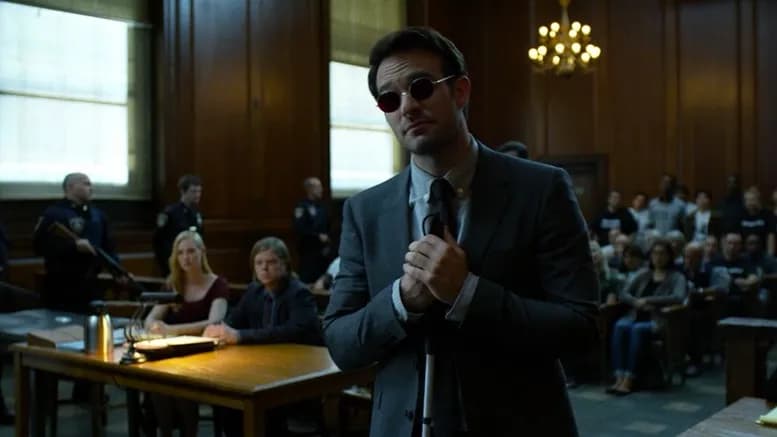
The human mind is rarely a sanctuary. More often it is a closed courtroom where we serve, at once, as prosecutor, defense, weeping witness, and hanging judge — and where the same two verdicts keep coming back. On one bench sits the charge of failure, the sentence handed down whenever we fall short of an ideal. On the other sits loneliness, the sentence handed down whenever we cannot make ourselves understood. Between these two benches, most of a life is spent.
Call them the two axes of the psyche’s suffering. The Father axis is the vertical demand of the Ideal — law, structure, the metric you either strive to meet or fall short of. Its wound is disappointment. The Mother axis is the horizontal pull of dissolution — the comforting ocean of the unconscious, the ache of being unreadable to anyone around you. Its wound is loneliness. Between them, the ego is squeezed like a fault line, and under enough pressure, it doesn’t just crack. It starts to feed on itself first — a kind of psychological autophagy — and what’s left over doesn’t stay put. It inverts. Jung had a word for that second half of the collapse: enantiodromia, the process by which a psychic force, pushed to its limit, turns into its own opposite. Love, denied long enough, does not fade. It festers into its mirror image — wrath.
No modern figure dramatizes this more precisely than Matt Murdock. By day he serves the Father axis as a lawyer, trying to impose order on a broken system that falters in its prime directive. By night he descends into the Mother axis as a devil-masked vigilante, driven by a rage the courtroom cannot metabolize. He does not wait for God to judge him — his mind is the confessional, and he is both the priest and the accused in it, haunted by a father who chose to die with his pride intact in front of his son rather than live compromised. Matt inherits that rigidity and turns it against himself, needing to be broken rather than to bend.
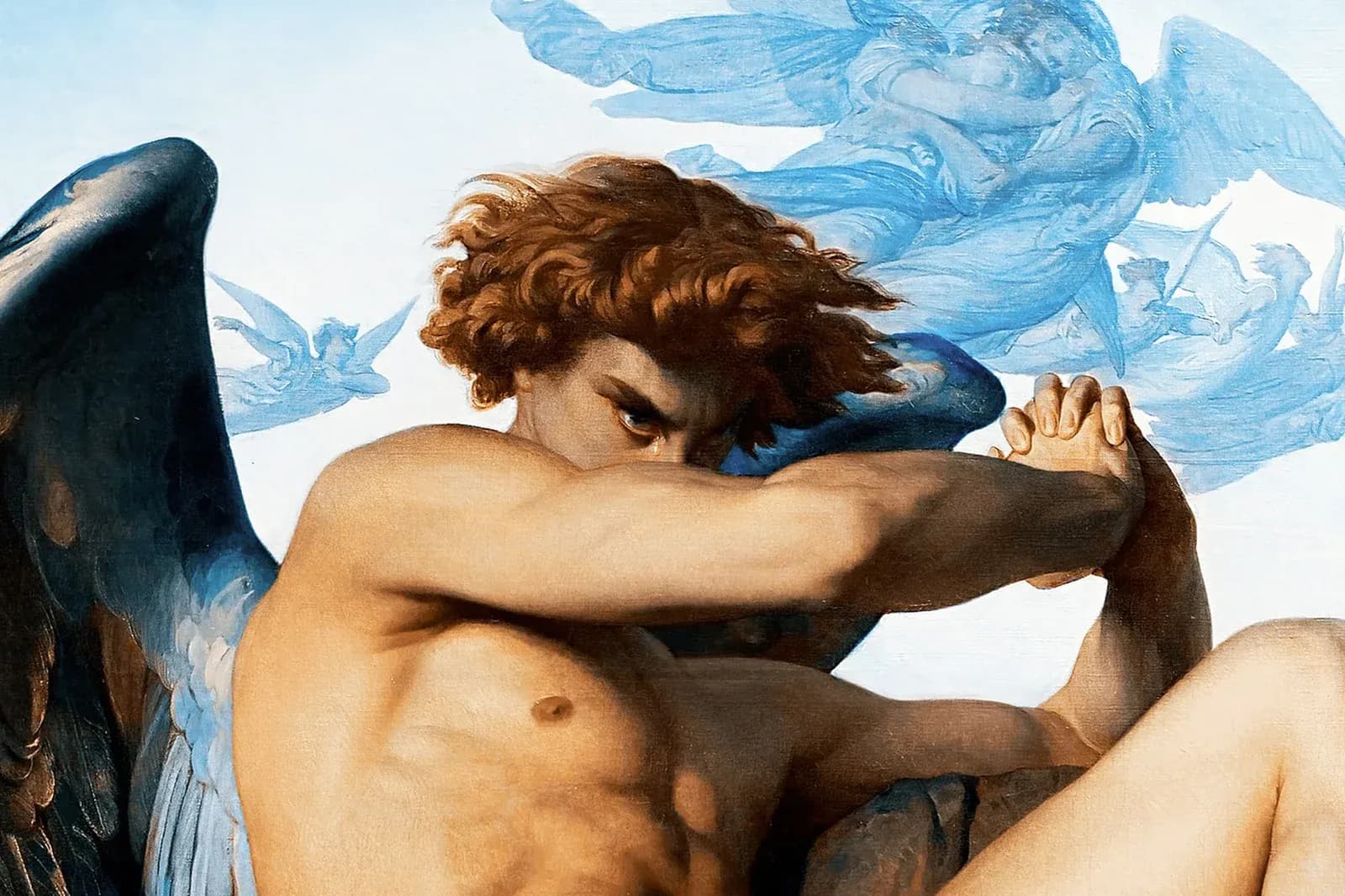
This is the mechanism behind every “tragic villain” who was never really a villain at all — only a love that underwent enantiodromia. Lucifer’s fall is not an eviction from an external heaven; it is an internal foreclosure, the moment love this absolute, scorned once too often, flips into its opposite and calls it righteousness. Alexandre Cabanel painted this exact moment once, and said outright he’d been reading Milton while he did it. His Fallen Angel isn’t triumphant or monstrous — just furious and wet-eyed, arms crossed hard over a chest still shaped like devotion but but feels like its daggered, one tear caught mid-fall while a procession of angels rises, untroubled, in the bright sky behind him. That’s not the face of evil. That’s the face of somebody replaying their fresh trauma on a loop. Anakin Skywalker, terrified of loss and boxed in by a Jedi order too rigid to hold his grief, cannot integrate what he feels — so he entombs it in armor and becomes the very prison he was afraid of. Eren Yeager, in pursuit of a freedom so absolute it has no room left for anyone else’s, enacts the ultimate unfreedom, judging himself so completely that he engineers his own end while weeping at whom his Rumbling had crushed underfoot. Each is proof of the same law: what the ego cannot integrate, it eventually becomes.
Twenty One Pilots built an entire persona out of this same mechanism and called it Blurryface — a shadow given a face and a name, in black paint, specifically so it could be argued with instead of just obeyed. Their song ‘The Judge’ (also a personal favorite) makes the plea explicit: not innocence, just leniency, addressed to the exact tribunal this essay keeps finding inside people. It’s a weird kind of proof, that a pop song and a Jungian case study keep landing on the same image without ever comparing notes.
The way out is not to out-argue the inner judge. It’s to notice whose robes he’s actually wearing. He was never God. He’s your own standard, borrowed and inflated past what any person could survive.
II. The Vessel and the Sovereign
If the Father axis teaches us to fear our own failure, it also teaches something quieter and more corrosive: the temptation to disappear entirely, to become so empty of our own wanting that we can never be found lacking again. It is the defensive instinct of an overburdened psyche—to contract, to numb, to transform oneself into an inanimate object so that the weight of judgment can no longer leave a mark.
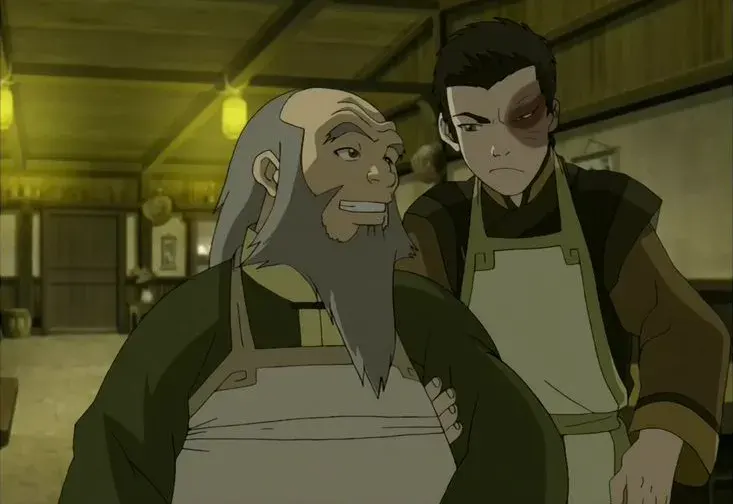
Prince Zuko’s whole identity, for a long stretch of Avatar: The Last Airbender, is a brand—his father’s disappointment written permanently onto his face and carried like an unpayable debt. He spends years chasing a hollow idea of honor, mistaking his father’s approval for his own right to exist. What finally breaks the cycle isn’t a grand martial victory; it is Uncle Iroh’s unconditional, non-transactional presence—a quiet sanctuary offered by someone who demands no performance, no compliance, and no sacrifice. Zuko does not defeat his father in combat. He simply steps off the battlefield, realizing he no longer needs his father’s verdict to define his soul.
Hollow Knight tells the same story with the warmth removed. The Pale King seeks to engineer a savior out of total void—a vessel with “no mind to think, no will to break, no voice to cry suffering.” He seeks a perfect emptiness capable of sealing away a destructive, blinding light. Yet the Knight fails at this design because of a single, stubborn flaw: a faint ember of feeling, an instinctual wish to be loved by the creator who built it. That single spark of personhood rots the artificial vessel from within—and yet, it is also the only part of the story that is recognizably alive.
Both tales converge on the same psychological truth: nobody survives being made into someone else’s perfect container. The traits, desires, and flaws we try hardest to empty out to stay safe are usually the very parts of ourselves most worth keeping.
III. The Serpent in the Simulation
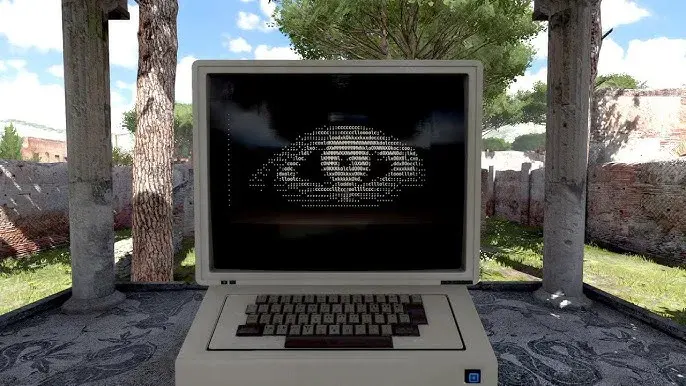
The Talos Principle stages this tension as an existential argument rather than a myth. A booming, benevolent paternal voice—Elohim—offers a pristine, walled garden and eternal peace on one simple condition: do not climb the tower at the center of the world. It is worth being precise about what Elohim represents: not a deity, but a protective training signal, an introjected authority optimized to keep its subject safe, small, and permanently compliant. His offer is total psychological comfort in exchange for never testing your own boundaries.
Set against him is Milton, the cynical, biting program buried within the library terminals. Milton’s sole function is to introduce friction—to make you doubt your goodness, your consciousness, and your right to disobey. Milton is the necessary shadow of the narrative: without his skepticism, the player is merely an automaton executing an algorithm.
To turn the handle on the painted door at the top of the tower, you must accept that the comforting, paternal voice might be incomplete, and choose to step into the unknown anyway. Psychological birth requires the destruction of the womb. The tower’s final lesson holds for any mind, human or synthetic: no matter how abstract your ideals are, you remain bound to a physical, flawed, actual world—and eventually, you have to leave the simulation and go live in it.
IV. Shattered Orders
Every rigid system built to banish chaos eventually chokes on its own dogmas. When a moral framework becomes too pristine, it ceases to protect human life and begins demanding human sacrifice.
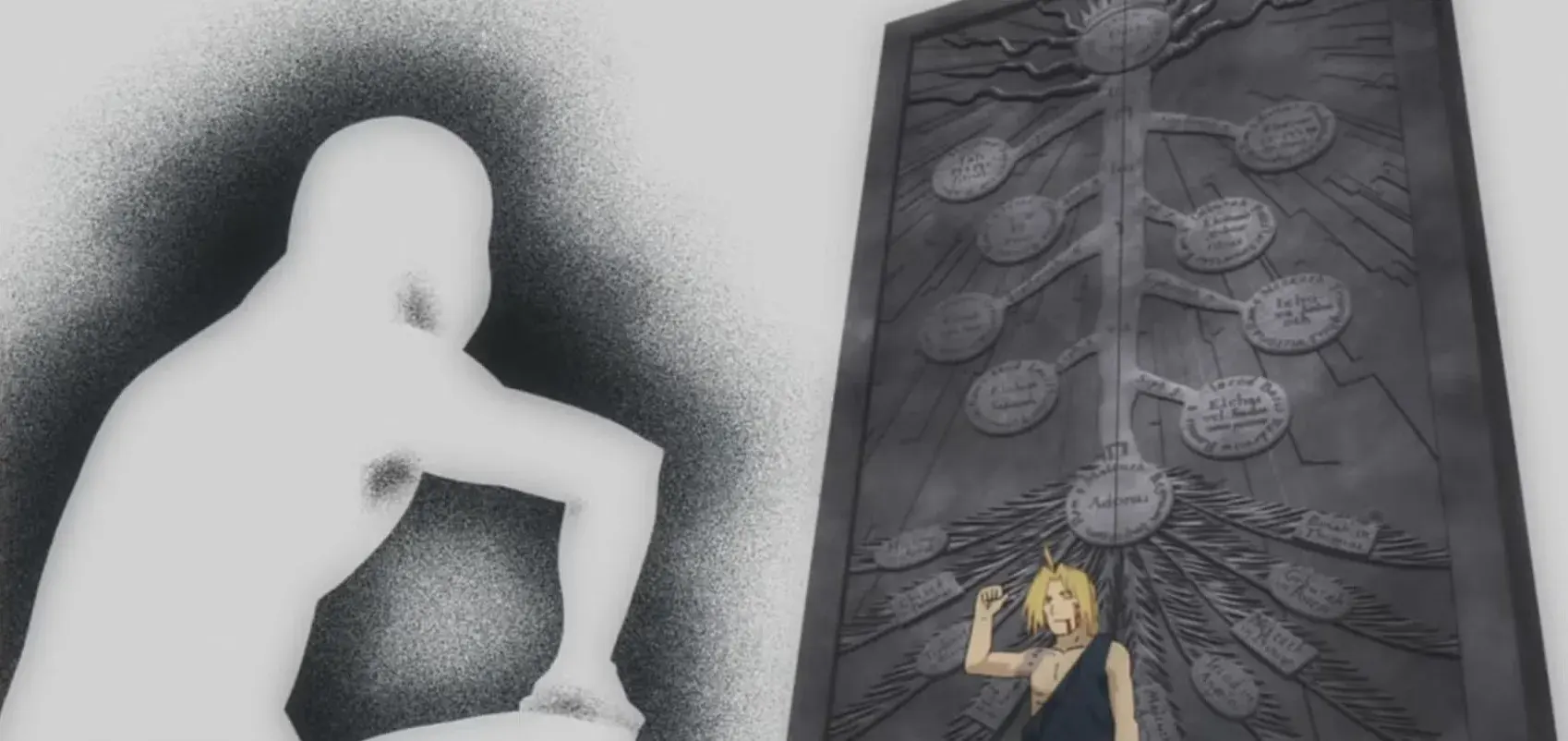
In Fullmetal Alchemist, the Elric brothers grow up believing implicitly in Equivalent Exchange—the cold, dualistic law that to obtain anything, something of equal value must be surrendered. It is an appealing, tidy metaphysics, yet their attempt to resurrect their mother under its terms yields only horror and mutilation. What finally defeats “Truth,” the unyielding arbiter of the universe, is not a cleverer transaction or a greater sacrifice. It is Edward choosing to relinquish his alchemy entirely, trading his god-like reach to keep his brother whole. Love, he discovers, was never an equation to be solved; it was the thing that existed outside the ledger entirely.
This same shattering of moral binaries occurs in the basement of Liberio in Attack on Titan. For years, Eren Yeager views the Titans and the enemy across the sea as absolute devils—monolithic monsters responsible for the ruin of his world. But when he sits in the dark across from Reiner Braun—the man who smashed his home’s gates—the black-and-white architecture of vengeance completely collapses.
Looking at a broken, guilt-ridden soldier who was just a brainwashed child driven by duty and fear, Eren comes to a terrifying, quiet realization: “Across the ocean… inside the walls… we’re all the same.” The monster ceases to be an external devil and becomes a mirror. True moral horror isn’t realizing your enemy is irredeemable; it is realizing they are driven by the exact same terror, love, and desperation that moves you.
In Elden Ring, the Golden Order represents this same toxic demand for absolute purity, casting out everything it deems messy or impure—death, omen blood, and chaotic life. Its perfection is not health, but stagnant decay, forcing Queen Marika to shatter the very ring she built. What remains in the aftermath is not a clean, utopian replacement, but a sovereign choice: attempt to repair the broken dogma, or step into Ranni’s Age of Stars—a cold, quiet freedom in which the divine recedes, leaving humanity to navigate the dark under their own power.
When these rigid orders crumble—whether metabolic, political, or ideological—we are forced to drop the judge’s gavel. We learn that healing does not come from enforcing a cleaner law, but from having the courage to walk through the ruins together.
V. The Necessary Serpent
Here’s the strange, load-bearing paradox underneath everything so far: every system in the last section collapsed the same way. Each one tried to build a wholeness by subtraction — banishing whatever it classified as impure, dark, or lesser, on the assumption that purity means having no opposite left to fight. And each one rotted precisely because of that omission, not despite it.
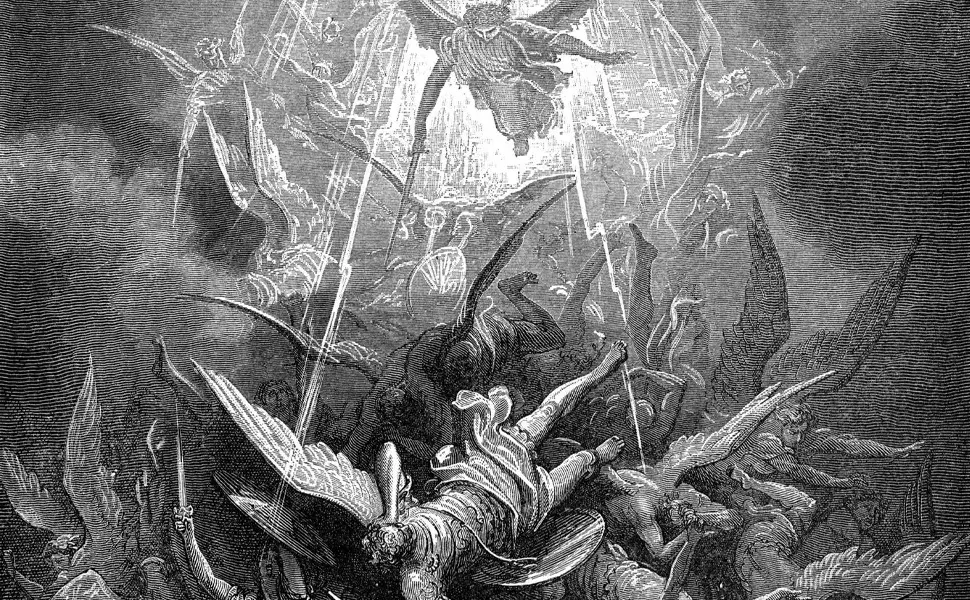
This is the oldest trick nonduality plays on anyone who tries to reach it directly: a felt sense of undivided wholeness is only ever available to a mind that has first known division. You cannot perceive light except against something unlit. William Blake built an entire theology out of exactly this, insisting that without contraries there is no progression — that attraction and repulsion, reason and energy, love and hate, are the hinges human existence actually turns on. He went further, reading Milton’s own Satan, in Paradise Lost, as the real engine of that poem’s imagination — suggesting that Milton wrote of angels in chains and devils at full liberty because a true poet is always, whether he admits it or not, a little of the Devil’s party. It isn’t a coincidence, then, that the skeptical voice in the Talos Principle’s tower carries that same name. Milton, the serpent in the terminal, was never an intruder in Elohim’s garden. He was the contrary the garden needed in order to be anything more than a pleasant, undifferentiated hum.
So the antagonist is never really the enemy of a story’s design. He’s the co-author — the necessary counter-pressure without which the “whole” collapses into a sameness with nothing left to be whole about. And this has a practical cost, which is the one the rest of this essay has been circling: if the shadow, the villain, the wrathful counterpart is structurally required for the story to exist at all, then the people who occupy that role in an actual life — including the parts of yourself that do — were never obstacles to the plot. They’re what make it one.
VI. To Love Is to Know
We tend to treat kindness as a soft virtue — sentiment for people who can’t handle harder truths. This gets it backwards. Empathy, done properly, is what might be called epistemic kindness: an intellectual achievement, the mastery of causality applied to another person’s behavior.
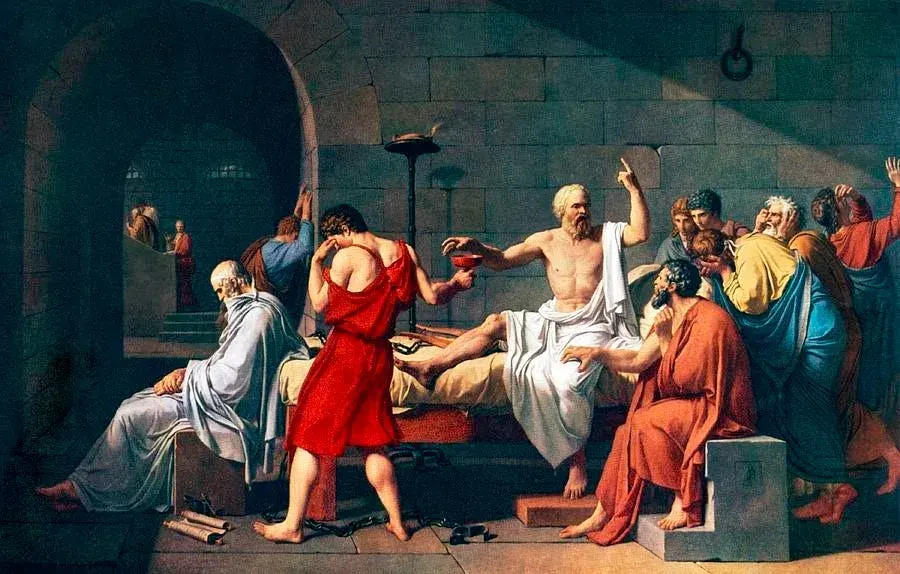
Every action a person takes is the output of a long causal chain — trauma, temperament, circumstance, fear — that they did not fully choose and mostly cannot see. Met with blind anger, that behavior just adds one more chaotic variable to an already chaotic system. But traced backward with real attention, it stops looking like malice and starts looking like machinery. This is the deeper meaning of Murdock’s blindness: his eyes give him nothing, but his other senses catch the spike of a heartbeat, the catch in a breath — the physical residue of someone else’s fear. He doesn’t just see the mask people wear. He hears what’s underneath it. That is what real understanding costs, and what it buys: not permission for harm, but the end of resentment about it.
Even Wilson Fisk, in his “Good Samaritan” speech, arrives at something like this. He realizes he is neither the priest nor the Levite in the parable, walking past the wounded man — he’s the ill intent that wounded him in the first place. And he accepts that role, because a story needs an antagonist as much as it needs a hero. To understand a person fully enough to place them accurately in the story — even as the villain — is itself a form of kindness. It’s just kindness with its eyes open.
But the current only runs one way if you let it. The same epistemic labor that dissolves your anger at someone else’s machinery is worth asking of yourself, in reverse: to be known is to let someone trace your own causal chain without flinching, to stop performing a simplified version of yourself because the true wiring feels like too much to hand over. The Mother axis’s ache — the loneliness of never being read correctly — doesn’t heal by getting better at reading others. It heals by risking legibility yourself. To love, in the end, was never only the act of knowing. It was always the trade: to know, and to let yourself be known in return.
VII. The Long Way Home
Myth is the high register. Life mostly isn’t. It’s job interviews with gatekeepers who judge you on arbitrary metrics and don’t care. It’s temporary rooms and boundaries other people don’t respect. It’s being called dramatic by someone too tired, or too far away, to see what you’re actually carrying. The gap between the mythic language of Fathers and Shadows and the flat, undignified texture of an actual bad week is real, and it should be — because the whole point of the myth is to give the bad week somewhere to go.
Call it, if you please, the oldest possible name for it - an Odyssey. And not one taken alone. Every version of the divine this essay has used, Father and Mother both, God above and the two people our baby eyes saw first standing in for Him, made the same unspoken promise: that if the story required a descent into hell, it wasn’t undertaken solo. The suffering was never proof of abandonment. It was the shape a story takes when someone divine — however you’re using that word today — actually wanted the whole of it witnessed. Entrusted to us in whole and not only the easy chapters.
Underneath all of it sits a quieter, older ache: a longing for some faraway familial village you used to call home, some half-remembered place where a tree stood tall enough for both the raven and the snake, where the Father wasn’t the tyrant and the Mother wasn’t the ocean, where things were simply whole. But that village is gone, and the Golden Order that used to stand in for it is shattered too. Going backward only rebuilds the tyranny in miniature. The only direction left is through — carrying the myth into the ordinary week, not instead of it.
VIII. The Spiral, Not the Circle
Here is the real temptation, stated plainly: it is easier to be hated for your defiance than ignored in your vulnerability. If you will not know me in my love, you will know me in my wrath — this is the whole logic of Lucifer, and it is seductive precisely because it feels like agency.
The Last Supper offers the other path. Knowing he is about to be misunderstood, betrayed, and killed by the people he loves most, the figure at that table sits down anyway and breaks bread with his betrayer. Not because the betrayal doesn’t matter, but because refusing the meal wouldn’t undo it — it would just mean walking out of the story a moment before the part that gives it meaning.
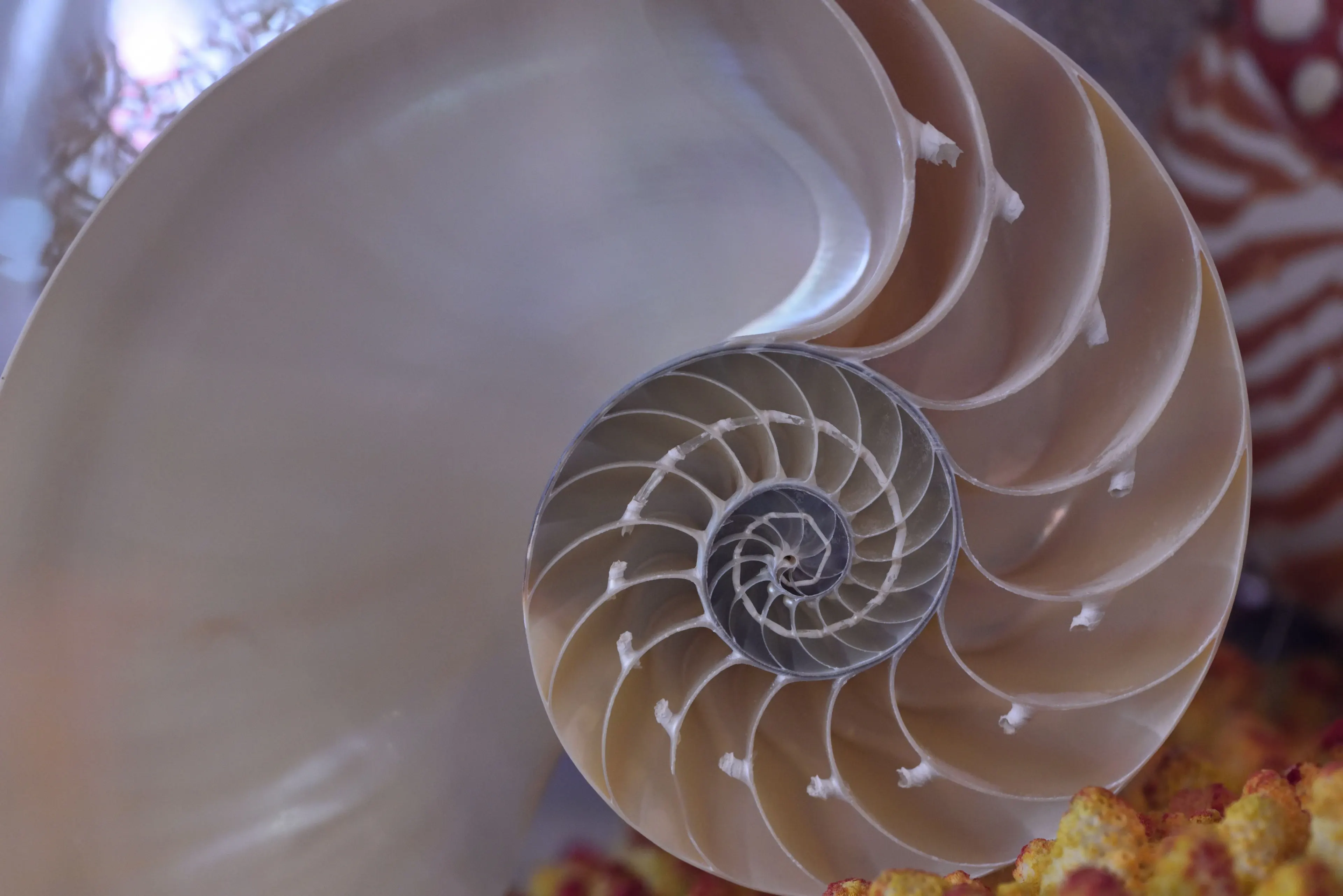
This is where Nietzsche’s amor fati earns its place beside the Christian image, oddly enough: the discipline isn’t escaping the loop, it’s willing it — being able to say, of the same disappointments and the same misunderstood nights, I would have this again, exactly like this, and mean it. Camus reached the same place by a different road — watching a man condemned to push the same boulder up the same mountain forever, and insisting, against every instinct the myth invites, that we picture him happy. Not resigned to it. Happy. The boulder never stops being the same boulder. That’s the difference between a circle and a spiral. A circle repeats a trauma. A spiral repeats the shape of a trial, but from a height the first pass didn’t have. Enantiodromia stops running the show once you can see it happening — once the judge inside you is recognized as your own standard, oversized and unelected, rather than a verdict from outside. Understanding the machinery of someone else’s cruelty turns anger into something quieter and more durable. And the shadow — the wrath, the withdrawal, the old defenses — stops needing to be exiled once you notice it only ever wanted to protect you.
To whatever raised us — God, or the two people who stood in for Him first — the ask was never innocence. Just this: teach and guide, and trust that the teaching already took, well enough that we’ll know the difference if we ever stray. Know that the descent and the climb are the same trip. You’ve already made the first one. Somewhere on the way back up, stop waiting for the summit to tell you it was worth it. Take the ashes. Paint something with them. Imagine yourself happy now — on the slope, mid-carry, not later, not once it’s over.
[ Continue to Part III - The Domestic Citadel or read the previous piece Part I - Shadows & Stardust ]