
Unraveling the Strings of Consciousness and the Soul
Table of Contents
Open Table of Contents
- From Guillermo del Toro’s Pinocchio, the Angel, and the Cricket
- I. The String of Voice: Jung and the Cricket on Your Shoulder
- II. The String of Blood: Alchemy and the Marriage of Opposites
- III. The String of Web: The Paths and the Collective Unconscious
- IV. The String of Time: Quantum Physics, Arrival, and the Shape of Choice
- V. Synthesis: Becoming Real
From Guillermo del Toro’s Pinocchio, the Angel, and the Cricket
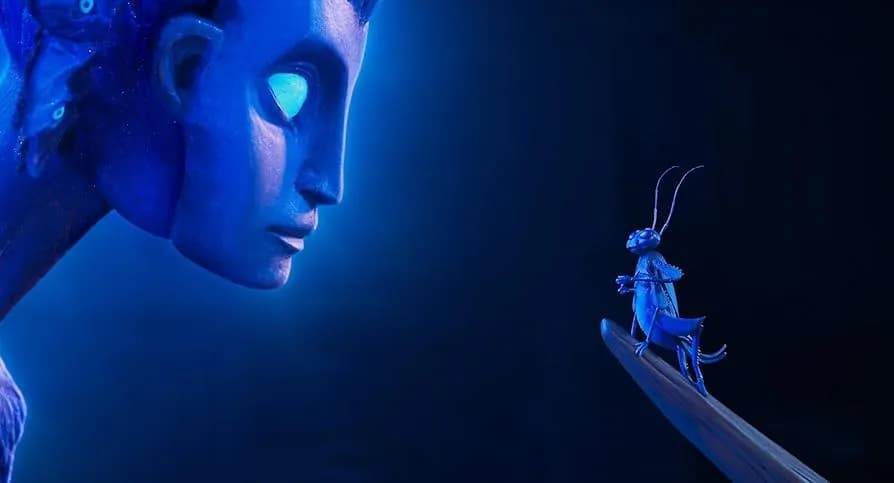
In the labyrinth of human consciousness, where strings of fate intertwine with the puppetry of the psyche, we find ourselves dancing to the tune of an unseen maestro. But what if, like Pinocchio, the point was never to cut those strings — only to learn whose hand is on them?
(Spoiler warning for Elden Ring, Attack on Titan, Arrival, and Pinocchio — though if you haven’t finished any of these by now, that might be its own kind of unfinished business.)
A puppet has four strings, same as the cross that holds them. One runs to the voice — the small, insistent thing that narrates you to yourself before you’ve decided who you are. One runs to the blood — the old wounds, alchemized or not, that pull your limbs in directions you didn’t choose. One runs to the web — the vast, tangled network of every other puppet whose fate has ever brushed against yours. And one runs straight up, past whatever hand is holding the cross, into something that might be fate, might be physics, might be nothing at all — the string of time, the one that decides whether you’re moving on your own or simply on schedule. Cut all four, and you don’t become real. You just fall down. What follows is an attempt to trace where each string leads, and what it might mean to hold them yourself instead of being held by them.
I. The String of Voice: Jung and the Cricket on Your Shoulder
Picture this: you’re standing in front of a mirror, scrutinizing your own reflection, and your mind starts running its mouth. Is that really me today? Why did I say that yesterday — that wasn’t the real you, was it? Or was it exactly you, just a version you haven’t agreed to yet?
That ceaseless internal chatter is more than background noise. It’s closer to a court reporter who never clocks out — narrating, judging, cross-examining your every move. Jiminy Cricket called it conscience, and told Pinocchio to always let it be his guide. But what if conscience isn’t only a moral compass? What if it’s the voice of something larger trying to get your attention?
Carl Jung — whose insight into the human psyche makes my own inner monologue sound like a toddler’s babbling — took that voice seriously. Where most of us use it to negotiate the ethics of a fifth slice of pizza, Jung heard something closer to a signal: a thread connecting the conscious ego to what he called the Self, the fuller, integrated person we are capable of becoming. He called the process of following that thread individuation. It’s less a single epiphany and more a lifelong argument you have with yourself, in which the goal isn’t to win, but to keep listening.
That voice isn’t always kind. Sometimes it’s your inner critic, informing you that your new haircut makes you look like a sentient mop. Sometimes it’s the unconscious itself, surfacing like a geyser of thoughts you didn’t ask for and can’t fully explain. Guillermo del Toro’s Pinocchio (2022) makes this literal: the cricket isn’t an external adviser bolted onto the story for comic relief, he’s a manifestation of Pinocchio’s own emerging awareness, walking beside him through a forest of mortality and moral error. With every mistake and every small triumph, the wooden boy’s inner voice grows less like an instruction manual and more like a self — which is, not coincidentally, exactly what Jung meant by individuation in action.
II. The String of Blood: Alchemy and the Marriage of Opposites
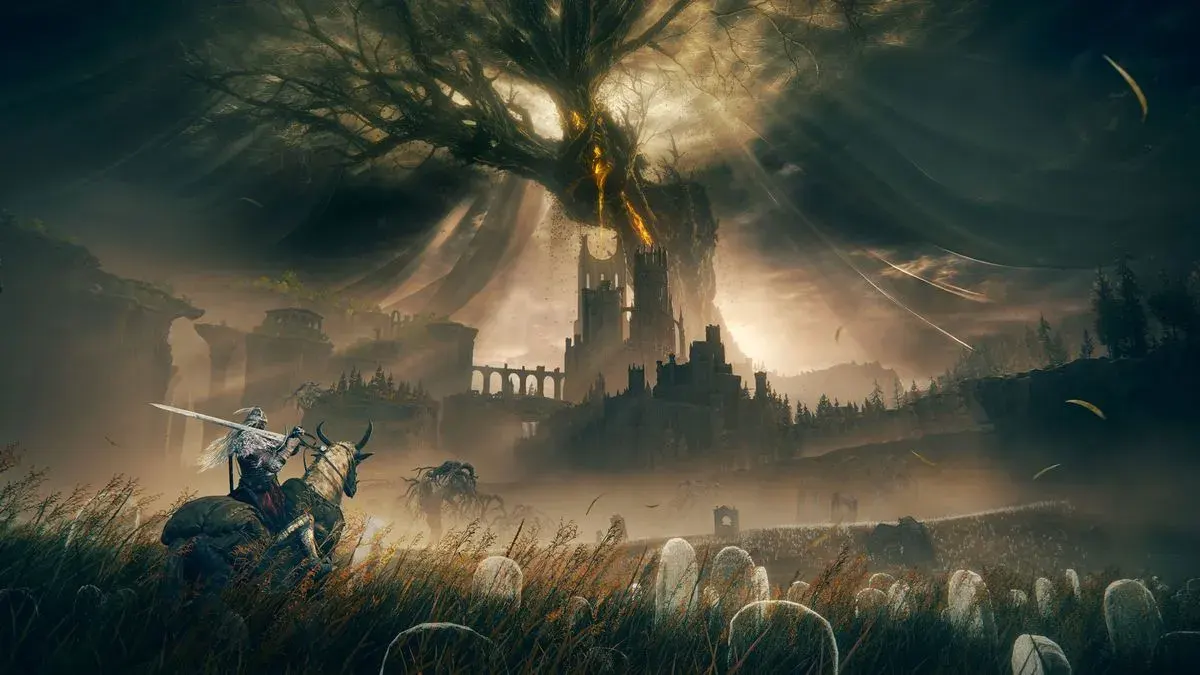
If the voice is the string that calls you forward, the blood is the string that drags you back — into the parts of yourself you’d rather not look at directly.
Jung borrowed heavily from alchemy here, not because he believed in turning lead into gold (though if you crack that one, do call), but because he found it to be the best metaphor humanity had ever produced for psychological transformation. Alchemists purified base matter by forcing opposing elements into contact until something new emerged. Jung called the psychic equivalent the coniunctio — the marriage of opposites — and it sounds like the title of a very strange rom-com, but it’s really just the anatomy of growing up: masculine and feminine, light and dark, the part of you that wants to be good and the part of you that already knows you aren’t, forced into the same room until they stop being enemies.
Elden Ring renders this almost too literally to be called subtext. Radagon and Marika — two halves of one divine being, locked in the Lands Between’s central wound — are the coniunctio given a face and a boss health bar. Your character, a nameless Tarnished, doesn’t win by destroying one half in favor of the other. You win, if you can call it that, by mending the Ring — by forcing the fractured pieces of a single fractured god back into something whole. It’s individuation with a moonlight greatsword.
But the game’s most honest statement about this process isn’t Radagon at all. It’s Blaidd. His loyalty to Ranni is total, and it’s exactly that totality that unravels him — he follows her into a plan that requires him to become something less than himself, and by the time you find him, wolf and man have stopped negotiating with each other. He isn’t punished for his devotion. He’s undone by refusing to let any part of himself disagree with it. Jung had a warning for exactly this: there is no coming to consciousness without pain, but there is also no consciousness at all in devotion that never argues with itself. Blaidd is what the coniunctio looks like when only one side of the marriage ever shows up.
III. The String of Web: The Paths and the Collective Unconscious
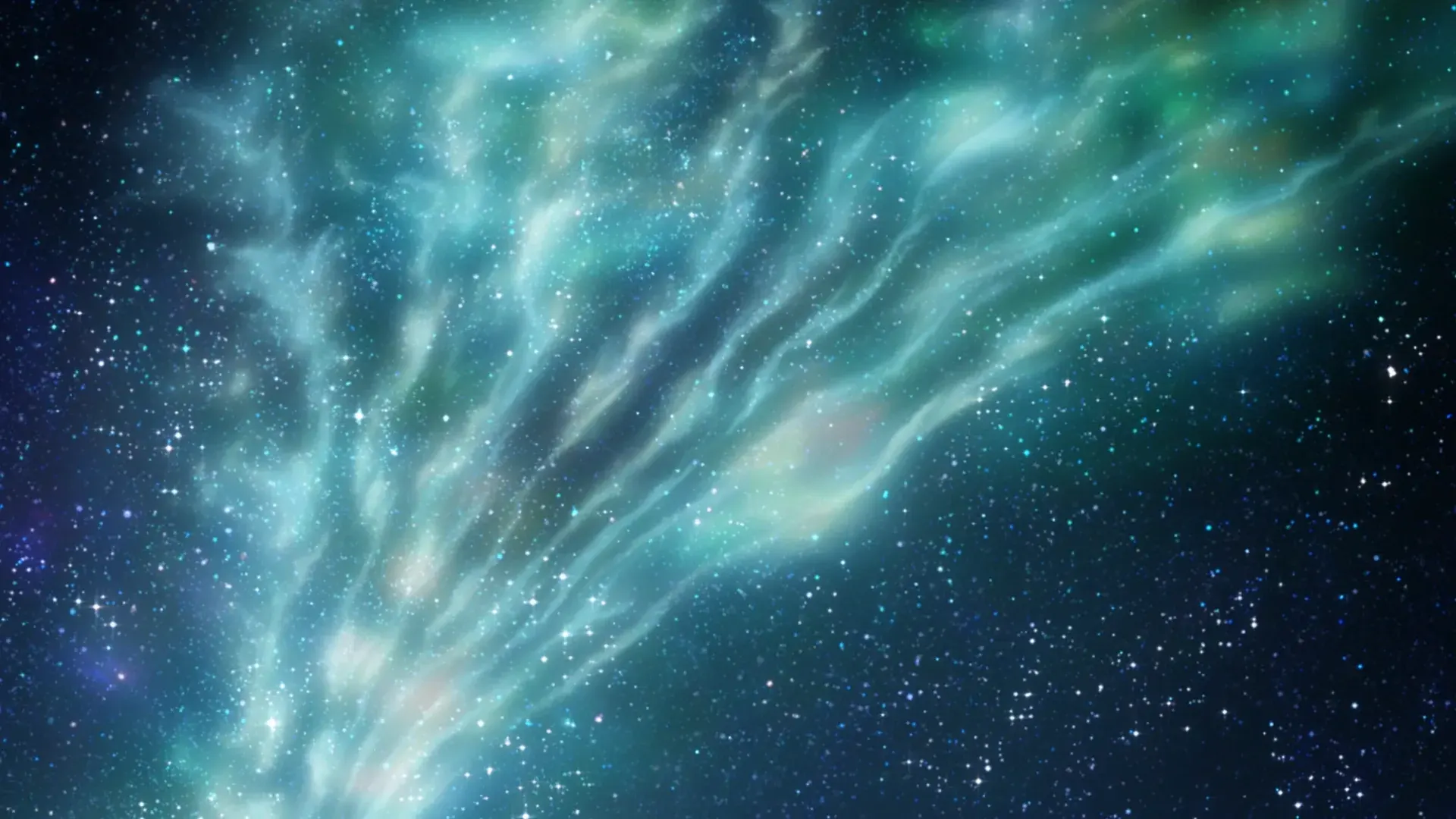
The third string doesn’t run to you at all. It runs sideways, to everyone else.
Attack on Titan takes Jung’s collective unconscious — his idea of a shared psychic reservoir beneath individual minds — and gives it a name, a texture, and a body count. “The Paths” connect every Titan, every Subject of Ymir, across memory, identity, and physical space, collapsing the distance between any two people who share that inherited blood. It’s the collective unconscious with a signal strength, and it comes with a very Jungian catch: the unconscious doesn’t obey the clock. Past, present, and future braid together on the Paths exactly the way Jung believed they braid together in dreams and myth.
Eren Yeager’s arc is what happens when a person is handed unrestricted access to that network. He doesn’t just remember his ancestors’ choices — he becomes able to rewrite his own future by reaching backward through them, which raises the question the whole series is quietly built around: is Eren choosing his fate, or is he the last domino in a chain that was falling long before he existed? Jung’s answer, I think, would be neither pure freedom nor pure fatalism. The forces shaping us are largely unconscious — but naming them is itself a kind of freedom, maybe the only kind available. Eren’s tragedy isn’t that he was bound by history. It’s that by the time he understood the binding, he’d already mistaken breaking it for the same thing as escaping it.
IV. The String of Time: Quantum Physics, Arrival, and the Shape of Choice

Three strings held, then — voice, wound, web. But the fourth doesn’t run sideways to anything. It runs straight up, out of the frame entirely, toward whatever it is that decides when the show starts. Is that fate? Physics? Something closer to us than either?
At the quantum level, particles exist in superposition — genuinely undecided — until something observes them into a single outcome. It’s tempting to reach for this as proof of free will, a kind of physics-flavored escape hatch from determinism. I don’t think that holds up, and I don’t think it needs to. Trading strict causality for quantum randomness doesn’t make a choice yours — a coin flip isn’t freedom, it’s just a different kind of chain. But the shape of the phenomenon is worth keeping anyway: nothing is settled until it’s observed. Held long enough in superposition, a life is still made of live possibilities. The self isn’t a wave function collapsing under some outside physicist’s gaze — it’s the rare case where the observer and the observed are the same event. Choosing doesn’t prove you’re free of causality. It’s what causality looks like from the inside.
Denis Villeneuve’s Arrival pushes on this from the other direction. Louise Banks learns a language built on non-linear time, and in doing so loses the comfortable fiction that her life is a sequence of surprises happening to her. She sees the whole shape of it — grief included — and chooses it anyway. That’s close to what Nietzsche meant by amor fati, though Arrival arrives at it through an alien’s ink circle instead of a German aphorism: the point was never to know the future in order to avoid it. It was to know it well enough to still say yes.
V. Synthesis: Becoming Real
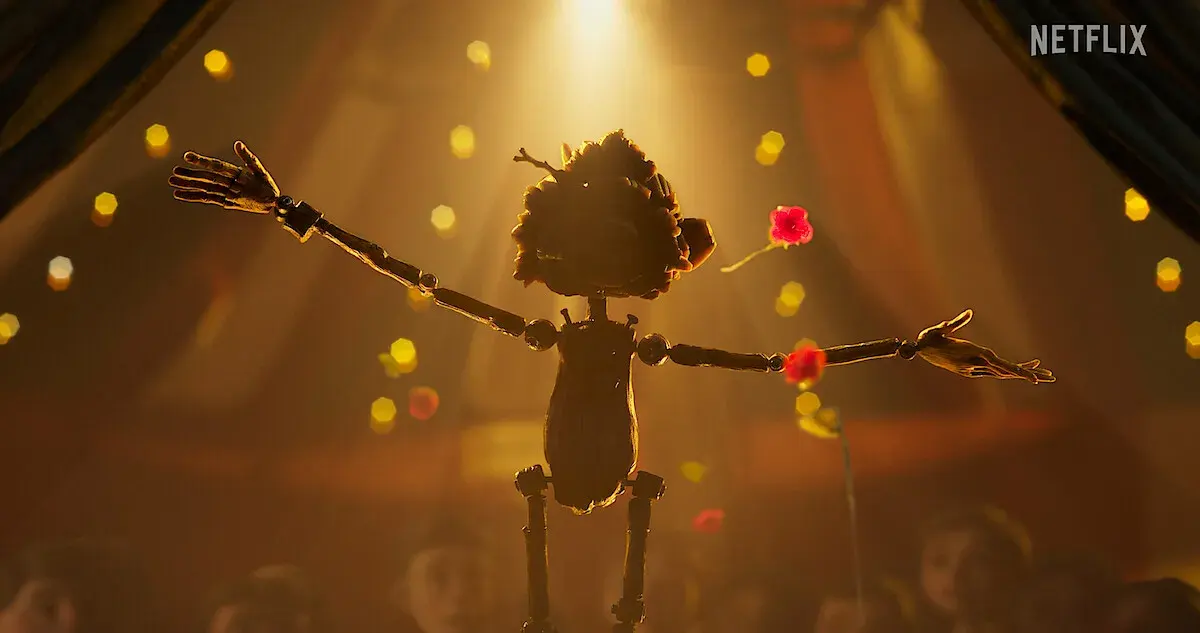
So where does that leave the wooden boy — and the rest of us, still checking the mirror, still narrating our own lives back to ourselves in a voice that sometimes sounds like wisdom and sometimes sounds like a toddler negotiating for pizza?
Becoming “real,” in the sense Pinocchio wants it, was never about cutting the strings. Voice, blood, web, and time don’t disappear the day you become conscious of them — they’re not obstacles between you and your true self, they are the material your self is made of. What changes is who’s holding the other end. The inner voice stops being a stranger and starts being an instrument. The old wound stops dragging your limbs sideways and starts, slowly, becoming something you can move on purpose. The web of everyone who came before you stops feeling like a script and starts feeling like company. And the string of time stops feeling like a countdown and starts feeling like the shape of a life you get to say yes to.
That’s the whole trick, and it isn’t a trick at all: every puppet’s four strings meet at a single cross, and nothing says that cross has to stay in someone else’s hand. In the grand puppet show of life, you were always both the marionette and the puppeteer. The only real choice is which hand is holding the cross.
References
- C.G. Jung, Collected Works. Princeton University Press, 1953–1979.
- G. del Toro, dir., Pinocchio. Netflix, 2022.
- FromSoftware, Elden Ring. Bandai Namco Entertainment, 2022.
- H. Isayama, Attack on Titan. Kodansha, 2009–2021.
- J. Harris, Quantum Physics Made Me Do It. Viking, 2023.
- D. Villeneuve, dir., Arrival. Paramount Pictures, 2016.